It’s all a Balancing Act ⚖️

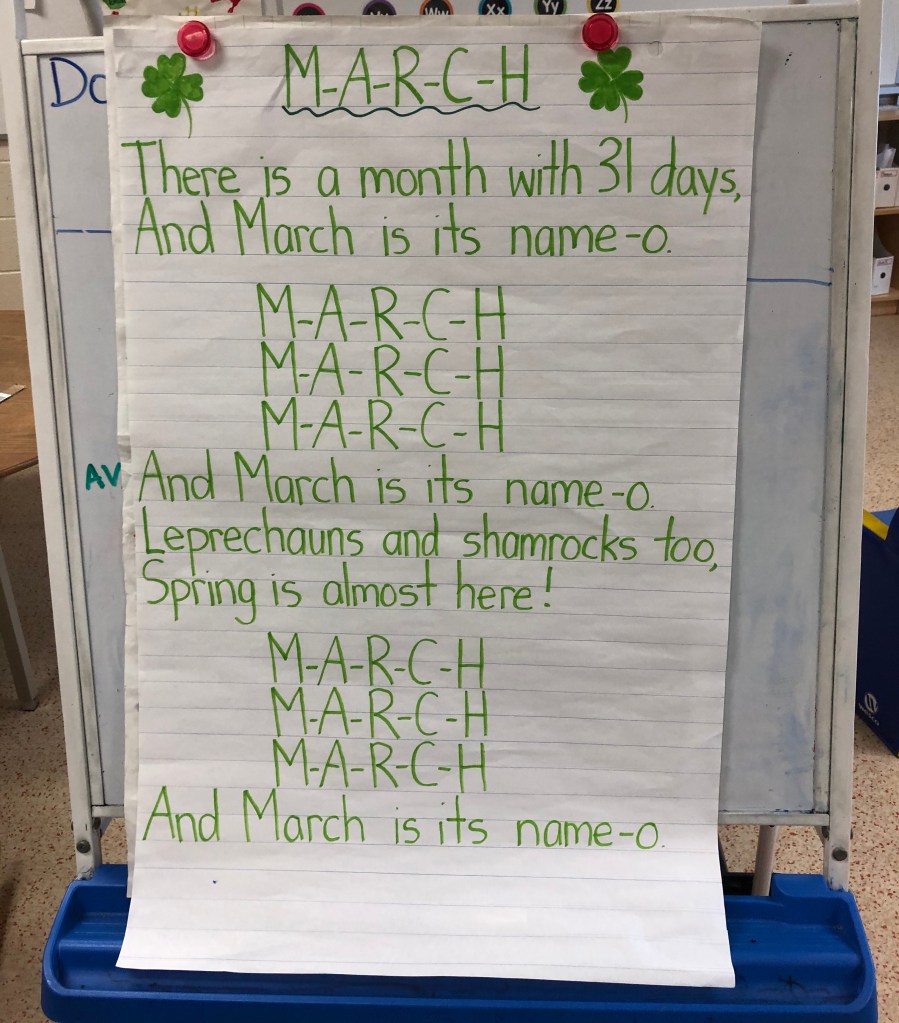
March break is so near! The teacher shared a song about the month of March. It was sung to the tune of “Bingo Was His Name-O”. The students had learned it earlier that week and they were happy to sing it for me. After hearing them sing the song it was clear to me that practice really does make perfect!
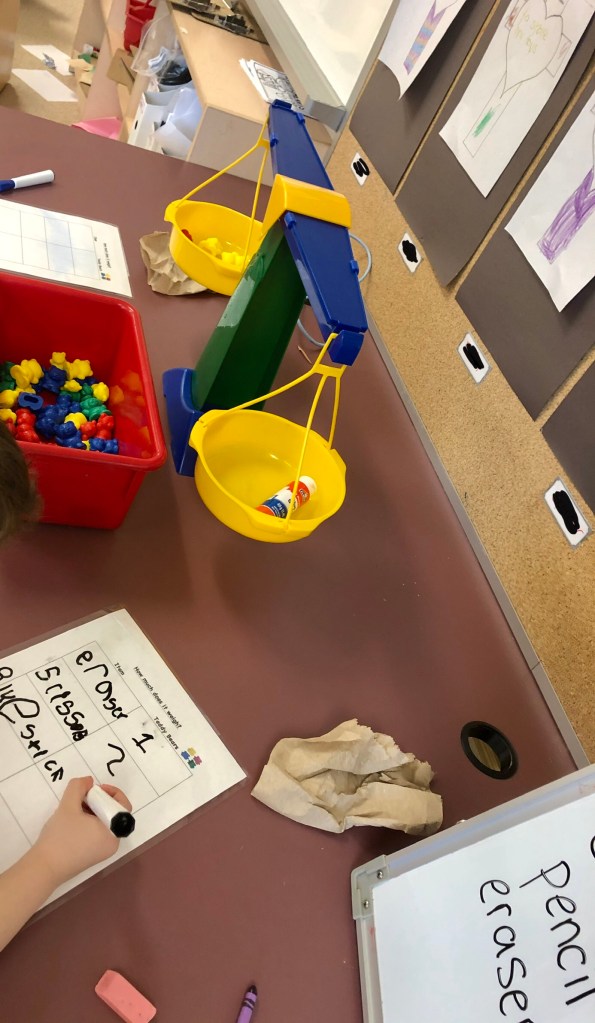
This week a new activity was introduced to centres that incorporated math and spelling practice. The students were able to use a balance scale to weigh items in the classroom that were relative to varying amounts of tiny plastic bears. They practiced spelling the items that they chose to weigh and recorded the numbers of bears needed to balance the scale. 
This week I have noticed how the strike has impacted the children in the class thus far. Since I began volunteering in the classroom I have realized how reliant these children are on their routine. Throughout the day, they will ask the teacher, “is it time to do (blank) yet?”. They anticipate future events and when these are disrupted it impacts their mood. There are specific children in the class who express frustration and anger when the events of the day do not go as planned, for instance, if it begins raining and we all have to go inside. Their frustration causes them to remove themselves from the rest of the students. It can often take a long time to get them calmed down and re-integrated into the next activity. 

In the news, I hear concerns from parents about the longevity of the strike and the lack of support they receive during these times. After seeing first-hand how the disruption of daily activities affects children, I can easily sympathize with these parents. Young children, like the ones in this class, do not fully understand what is going on and why they aren’t able to attend school regularly. They may become overwhelmed and this puts additional strain on the parents/guardians of these children. We must keep in mind that this occurs on top of the stress they already receive from having to arrange care for the child when they are home during the day. Furthermore, for many families, especially those of single parents, the options are limited and this strike may be causing financial distress. These impacts will continue to worsen with each time a settlement is not able to be reached. I know this strike is occurring for the benefit of the children but I am beginning to question if this is the best way to go about it.

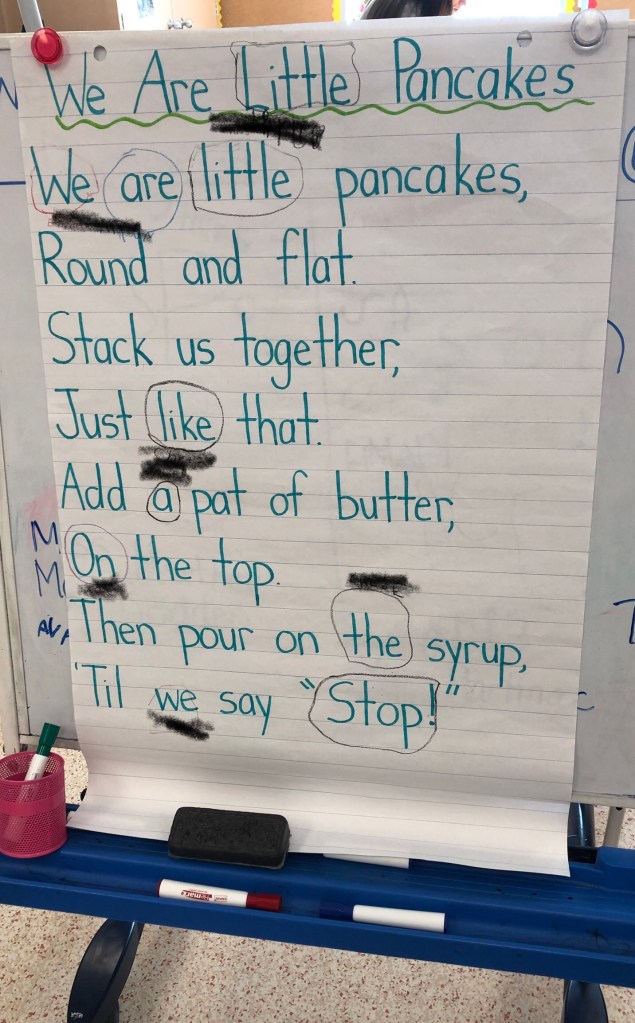
Pancakes Anyone?🥞

This week students and staff celebrated Shrove Tuesday by eating pancakes in the gymnasium that were kindly prepared by parent volunteers. The teacher shared a clever song that related to their celebration. You can see in the photo where students have circled certain words in the song. These are words that were recognized because the students have previously learned about them. In my placement I have been taught the importance of identifying words children may know while reading to them. It was clear to see that each child felt a sense of accomplishment after they had successfully spotted a word they had learned before. 

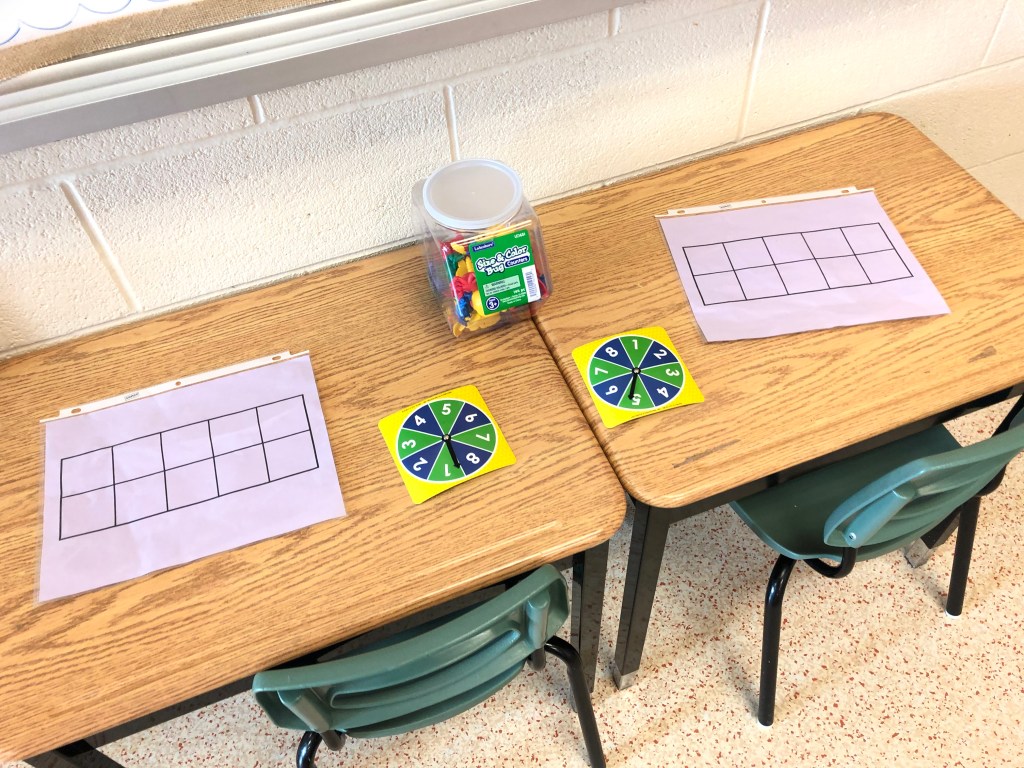
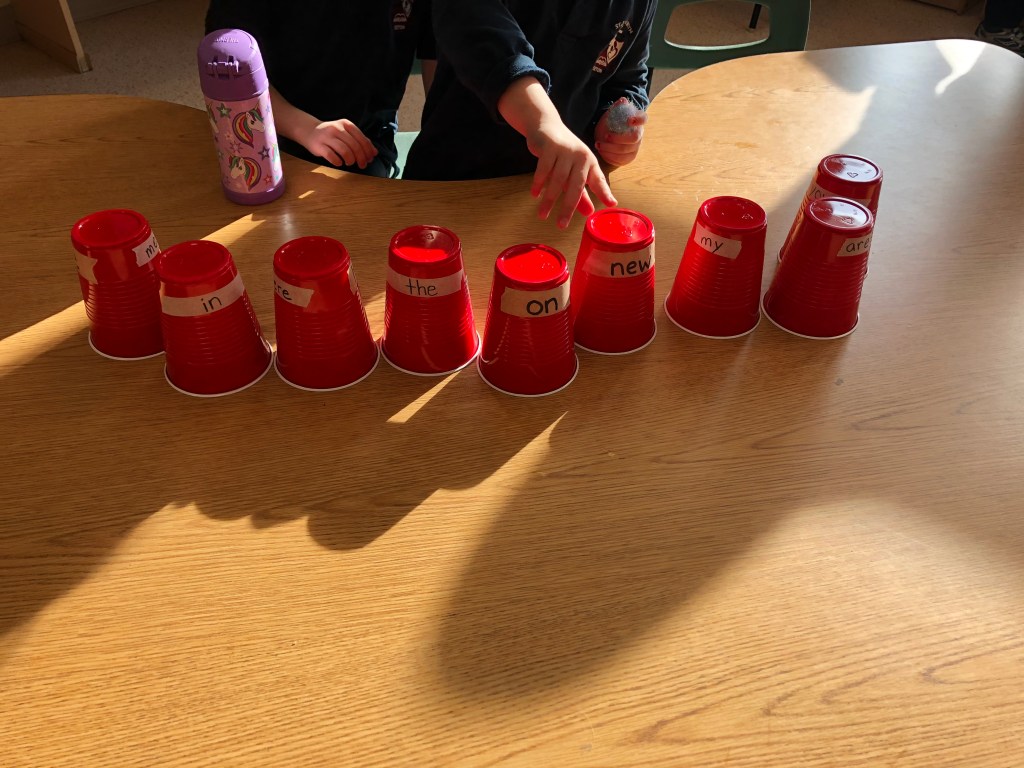
This week the teacher added two new activities to the students’ centers. One was about displaying numbers on a chart using toy creatures. This allowed the children to visualize the values assigned to the numbers they landed on using a spinner. The students were excited to show me the other new activity. One student would hide a pompom under a cup while the other student was not looking. Then, the student would open their eyes and guess which cup the pompom was under. The trick is that the child would have to say the word that was spelled out on the cup before the leader would lift the cup. This added a sense of excitement when the child finally got the word correct. Making learning fun is critical for keeping young children engaged. I already knew this was the case before coming into my placement, but now I’ve had the chance to see first-hand how it can be difficult to develop teaching techniques that meet children’s short attention spans. I’ve also noticed that some children require more help getting and staying involved in classroom activities. Therefore the required support must be present in the classroom. This helps in ensuring every child meets the learning goals of their grade level.

Caution: Biohazard ☣

The teachers are beginning to call all the kindergarten classes “biohazards”. Flu season is in full swing and it has affected many of the students and also the teachers who work with the younger children. The classroom vibe was very different because of this. One child said they needed to lie down on the couch because they were beginning to not feel well. I watched as another child noticed her friend lying down. The child dropped her snap cubes, left her group of friends she was playing with and rushed over to the bookshelf. She grabbed a book and plunked herself down right in front of her friend who was feeling ill. She opened the book and began showing her the pictures. I went over to praise the girl for caring for her friend by sharing a book with her. She responded saying that whenever she did not feel well, that is what her mom would do for her and it always made her feel better. It was a very bittersweet moment and I’m glad I was able to witness it.

When I arrived today, I realized that I am beginning to notice a trend. The students are most definitely associating my arrival with pizza day. This was the second week in a row that they have chanted “Miss Heather, pizza day, Miss Heather, pizza day!!!” as I walked in the door. As you have probably already guessed, the day I volunteer happens to also be pizza day. I am beginning to worry that the students are only excited to see me is because they are then reminded that today will be pizza day. I am really hoping this is not the case.

There is one child in the class who often experiences difficulties transitioning from one activity to another. When it was time to come inside from playing outdoors, the child got very upset and began to yell and cry. I observed as the teacher was very patient with him and eventually got him to come inside and take his winter gear off. Still very upset, he sat through carpet time as the teacher read a story and did an activity with the students. The activity involved recalling important parts of the story. When it was time for the students’ center activities, the child I’ve previously mentioned ran over to a box of shapes, picked them up, and walked towards where I was sitting at a table. He handed me an instruction booklet that showed how to build a 3D object. Together we sat and built the object. I walked the child through it step-by-step, allowing him to do all the work. After we had finished I could tell he felt pride in his accomplishment. He stared at the object with wide eyes and a huge smile. I was happily surprised at how this activity we completed together had distracted him from the sadness he was experiencing earlier on.

The teacher mentioned during gym class today that in the following weeks, instead of letting the children run wild with hula hoops and various other activities, she would organize an activity for them to play. I look forward to seeing how this plays out considering how wild the children get the very moment they step foot in the gym. Stay tuned for updates next week!

Keeping Kindness in Mind

This week the children celebrated valentine’s day by recognizing the importance of performing acts of kindness. The older students at the school organized a kindness assembly. The goal of their presentation was to teach younger students how to recognize bullying in their classrooms and on the playground. Students were also taught the importance of acting upon it, rather than being a bystander. I thought this assembly was an excellent way of teaching students about their agency in changing the school’s environment so that more of their friends can feel included and have a more enjoyable experience at school. Throughout the assembly, I realized some important pieces of information. The first is that kindergarteners have an attention span of approximately 30 minutes (if that). Second is that I really enjoyed how the students were given a chance to ask their questions throughout their presentation. It was easy to see that the children felt involved during the assembly. The old students incorporated a short skit into their presentation. This taught the audience how to identify an act of bullying, as well as how to be a friend to someone who has been a victim of bullying.
Interestingly enough, being at the school while they celebrated Valentine’s Day reminded me that this holiday is not only what social media has made it out to be. It’s not just about having a significant other and going on fancy dates. It’s about appreciating every person in your life. The children reminded me about the importance of celebrating friendship and kindness on Valentine’s Day. My spirit was lifted by their smiles as they filled each other’s decorated paper bags with special cards addressed to one another.

Gaining Insight from the EA

Today I arrived earlier than usual. I was in the classroom in time for the national anthem, prayer, and announcements. A few students from the school took part in reading the prayer. After this, the kindergarten class enjoyed their outdoor time as they played in the snow. It had snowed quite a bit that week so the snow hills that were made by the snowplow were very tall. I met a student from the other class who was excited to show off his new hat that a family member had kindly knit for him. After some observation, I noticed that the children played very well in the snow together. A majority of them chose to play in larger groups. 

I went to the gym with the students for the first time this week. The teacher previously had her planning period during this time so a different teacher would usually take the students to the gym. Due to this, the teacher told me she was not used to teaching a gym class so she would need some time to adjust. For the first day, the teacher placed various items for the children to play with which included things like balls and hula hoops. The students seemed happy to just be able to run free and play with their friends.

Today I had a chance to converse with the EA. This EA focuses her efforts mostly on one child with behavioural challenges, but she also assists in other areas of the classroom when needed. The EA told me that she had previously worked in highschools for many years but has recently made a switch to assisting elementary school children. When I asked her about which she had found more challenging, to my surprise, she said that for her they were both equally as challenging but for very different reasons. She said that children in the kindergarten age are dependent on their instructors to guide them through daily activities and turn to them for help in times of need. This can be challenging when there are many of them in a classroom and only a few instructors to meet these needs. The EA noted that although high school students have more initiative, the older age can bring on separate challenges for instructors. In particular, her biggest challenge was working with students who often become aggressive. It is very difficult to deal with a situation when a student who is the same size, or even larger than yourself, becomes angry and begins taking out their emotions by becoming physically aggressive. This conversation was very helpful in presenting that both younger and older children supply their own sets of challenges. Support workers must be equipped to deal with the challenges that are specific to the age group they are working with.

After I had observed how well the child listens and attends to the EA’s instruction I asked her how she was able to do this. The EA said the relationship she had built with the child is what made it possible. Early on into working with this specific child, she noticed that the child responded better to discipline tactics that were provided in a more “nurturing” manner. She said this may be due to a lack of this type of attention in other areas of the child’s life. This called me to reflect on the larger picture when dealing with children who exhibit behavioural issues. Teachers and classroom helpers may not have the power to change the implications that social structures or family arrangements have on a child’s life. Although, what they can do is provide the support needed during the time they spend with that child at school. The EA was able to look beyond the challenges presented by the child and respond in a way that she knew the child would attend to. I have now realized that the reason the child listens more often than not to the EA is due to her caring nature. Other forms of authority that are within the classroom struggle to have the child respond to their instruction. This conversation was a critical learning moment for me. I was able to learn the tactics developed by the EA because she took the time to understand the child and give them the support they needed.

Daily Routines and Banana Dances

The day began with the students going outside. Many students were eager to show me around the playground. A few minutes later, one of the teachers began to host a game of hockey using pool noodles as hockey sticks, for safety reasons. There were not enough pool noodles for all children to participate in the game and many had no interest in doing so anyway. The teacher and I were welcomed by a group of students to watch a show they were putting on in the outdoor stage area. In this area, half logs were set up as seats. Later, I was able to gather a group of students who were not playing hockey to play hopscotch. 

Once inside, the students began carpet time. I found that many of the children did not respond well to sitting still and listening since they had just come from playing outside. On days like this, the teacher has a “banana dance” activity where the kids are able to stand up and follow a short dance routine on the spot. This allows the students to shake off all their energy and wind down so that are able to be attentive during reading time. 

Today I noticed that there was much less chaos than the week before. The EA was in today and she attended to the children when the teacher was not able to. The additional support of one extra person who the children enjoyed and trusted made a large difference in the classroom’s atmosphere. I am now beginning to pick up on the classroom routine. After playing outside for an hour in the mornings and finishing carpet time, the students are split into 3 or 4 activity tables and rotate between them during the hour. The table activities always include snacks, arts and crafts, a number or shape activity, and writing journals. This keeps them busy and since the children rotate between activities they avoid becoming bored of doing the same thing for too long. 

I should note that this week I went into the classroom this week with a new perspective. The readings this week highlighted how students’ positionality has an effect on their individual service-learning experiences. This led me to reflect upon my own experiences in the education system. Going forward I will take the knowledge of how the inequalities present in society have disadvantaged certain groups from experiencing the privileges that I have been given as a white middle-class student.

Meeting the Students

As I stepped into the kindergarten classroom for the first time I witnessed the most difficult time of the day. Snow pants, coats, boots, hats, and mitts sprawled everywhere as the teacher attempted to help all the students get their winter gear off. I quickly realized the challenges encountered when the children come in from playing outside. Having not even met the children before, I questioned whether my attempts to help the teacher with the students was a good idea. One teacher’s efforts to help 15 children get their gear off was most definitely a scene of chaos. The teacher later informed me that the EA who is usually in the classroom every day to help a child with behavioural challenges would not be there today, and neither would any replacement to provide the support that was needed.

Once inside the classroom, a few of the students were quick to introduce themselves as well as some of their friends. I was quickly identified by my orange hair as I overheard some of the children talking while they sat on the carpet, waiting for their teacher to finish helping the remaining students in the cubby room. After the teacher formally introduced me she made a note to the children that they would not be having gym today due to an event taking place in the gymnasium. Many of the children appeared unhappy about this change to their daily routine. 

During the lunch hour, the teacher played music for the children. This included Kids Bop and songs from the Disney film Frozen. The teacher notified me that she likes to do this for the students but it can be difficult because she has to make sure there is no inappropriate content in songs that may appear to be okay for children to listen to. As the children ate lunch some of the students in the older grades came to help supervise and play with the children. I thought this was a great way to provide support for the teacher as it was much needed that day. 

Once the students got to know me over the few hours I was there, many of them struggled to understand that I was not a teacher. I told them that I was a student just like them and still had a lot to learn. Their response was to ask me why I wasn’t wearing a uniform, and why did I look like a teacher. I discovered that children rely heavily on their perception of people when deciding which type of individuals hold authority within their classroom. 

Getting to know all the children in the kindergarten class was very exciting. I look forward to visiting them on a weekly basis. I am very passionate about education and my dream is to one day become a teacher. I expect to face challenges during my experience with service learning, but I know that these challenges will help me to become more knowledgeable about how biases and social structures have an impact on classroom environments.

Design a site like this with WordPress.com
Get started